|
Prosticks Articles
Hong Kong Economic Journal --- Sept 25, 2000
Introducing the ADX Indicator
Most people use RSI to monitor the overbought and
oversold condition of the market. It is generally
perceived that if the RSI is above 70, the market is
overbought and if it is below 30, it is oversold.
The drawback of using RSI this way is that during a
prolonged trending market, the RSI will hover around the
overbought or oversold region for a long time. In this
case, if we blindly sell when overbought or buy when
oversold, we will easily get squeezed by the powerful
trend. Besides, the RSI indicator very easily enters the
overbought/oversold region. Thus, it generates a lot of
noise and indicates whether the market is
overbought/oversold only on a short-term horizon.
In this aspect, the ADX indicator does a better job. It
is not easy for the ADX indicator to be overbought or
oversold. Thus, for a prolonged downtrend such as that of
some currencies these days, the ADX is a better indicator.
Traders in Hong Kong are not familiar with the ADX
indicator. However, it is widely used in US. Basically,
the ADX indicator tells you whether the market is trending
or is consolidating. If the value is below 30, that means
the market is consolidating. One should then define a
trading range and buy low, sell high? If the value is
above 30, it means the market has entered a trending
stage. One should follow the trend. Notice that the ADX
indicator does not distinguish between an uptrend or
downtrend. The value only indicates the strength of the
trend. A trend with an ADX of 50 is stronger than one with
an ADX of 30. To know what direction of trend the ADX
refers to, we have to rely on the PDM and MDM which goes
along with the ADX indicator. If PDM > MDM, it means
the ADX value represents an uptrend. If PDM < MDM, then
the ADX value represents downtrend.
When the ADX is above 60, the market is either
overbought or oversold, depending what direction the
current trend is.
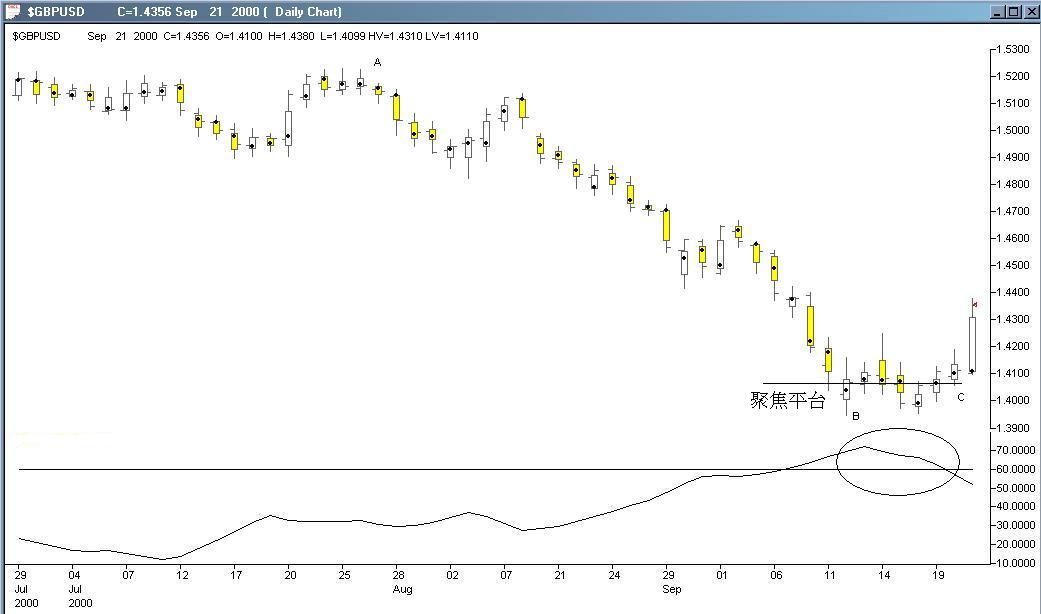
Figure 1 shows the Prosticks chart of British Pound
with the ADX indicator plotted below. Notice that from A
to B, the market is falling while the ADX is rising
and stays above 30, indicating a strong downtrend. At B,
the ADX value attains 60, signifying an oversold
condition. At the same time, the market starts to bottom
out. From B to C, the Modal Points clustered
around a Modal Platform, indicating the presence of
bargain hunting at this low level. Then at C, the
ADX starts falling and the market explodes more than 200
points the next day.
If you plot the RSI indicator instead of the ADX, you
will realize that throughout the downtrend from A
to C, the RSI lingers in the oversold region most
of the time, rendering it useless. For a prolonged
downtrend, the ADX is the better alternative. It is too
easy for the RSI to be in the oversold region while for
the ADX, it takes more dive of the market to push the
market to the oversold mark.
Readers can examine the ADX indicator for different
stocks and currencies in the official website of the
Prosticks (www.prosticks.com).
|