Besides helping to confirm traditional charting, candlestick, and indicator signals, and to warn against possible false signals, ProSticks can also determine entry and exit positions earlier than with other techniques. Since ProSticks' analysis is based on the Modal Point, the most heavily transacted price for a specified time interval, calculating technical indicators, support and resistance levels, and drawing trend lines will be more accurate than with the high, low, or close, due to the significance of the Modal Point. 
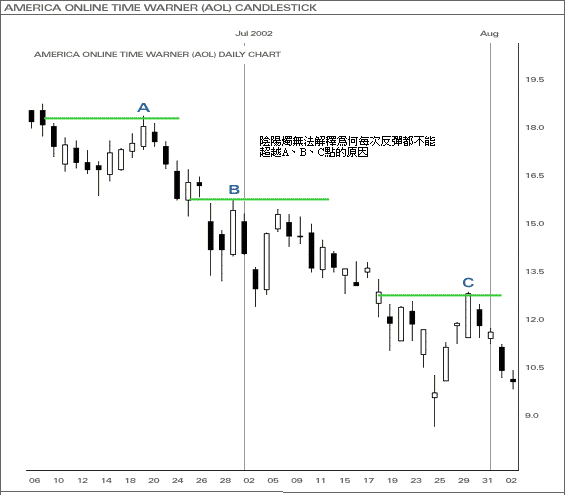
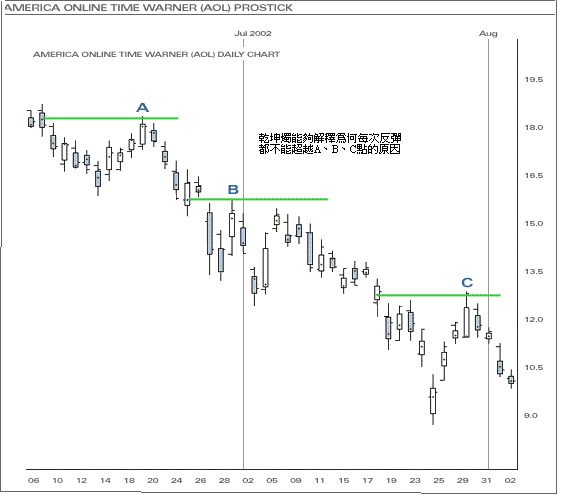
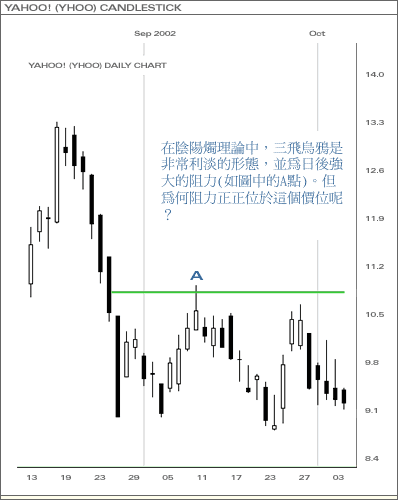
The above example shows the price in the midst of a downtrend. On occasions, the price would rally back, possibly on oversold conditions, before continuing its decline. A traditional chart (as above) does not offer any clues as to why resistance was met at points A, B, and C. 
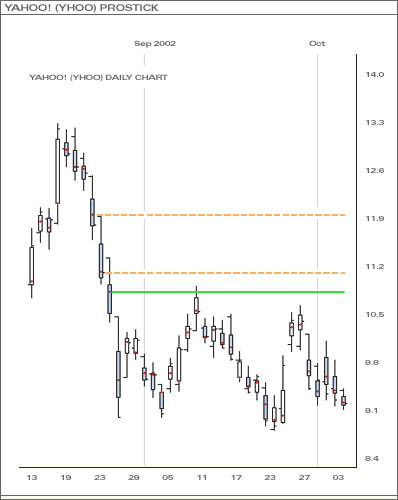
On the other hand, the above ProSticks chart can help explain why resistance was met at points A, B, and C. As explained earlier in this section, significant Modal Points, more often than not, are key levels of support and resistance. However, it takes time and experience to be able to correctly identify the Modal Points that are deemed to be significant. ProSticks can also help explain events that traditional charting methods cannot, even after-the-fact. 
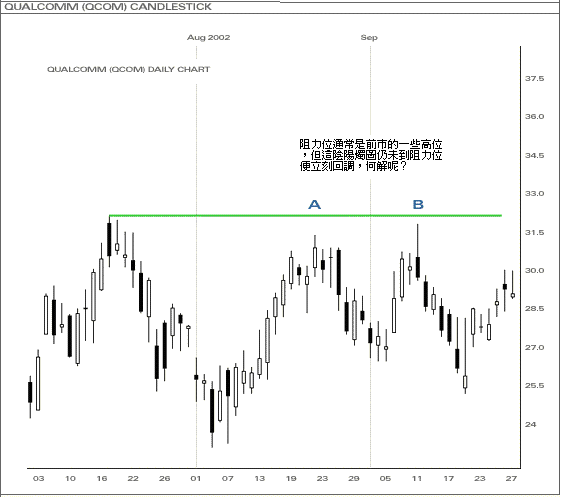
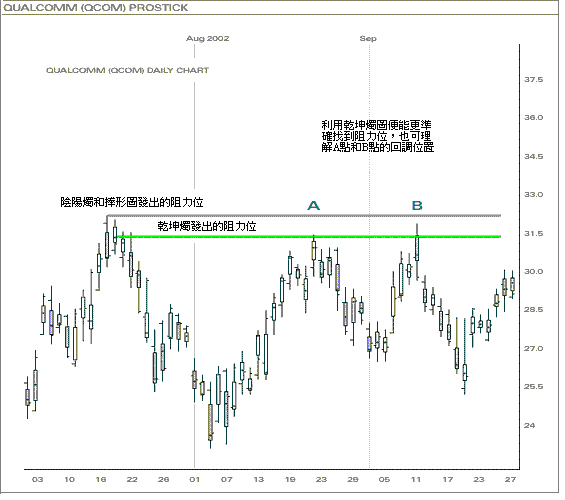
With a traditional chart, resistance levels are usually drawn from a previous significant high (as above). The resistance met at points A and B would leave the technician dumbfounded as to why the previous resistance was not reached. But upon further inspection of a ProSticks chart, it is clear that resistance was indeed met. 
At both points A and B, the resistance created by the previous significant Modal Point high was met. The majority of the trading (i.e. Active Range) was below this resistance level. By using ProSticks as the gauge, if the price broke above the ProSticks resistance level, one would consider the situation very bullish, even though the previous high had not yet been met. An earlier entry position would result. On occasions, with traditional technical tools, resistance levels cannot be easily predicted if it was not a previous high or low. 
However, with ProSticks, this task becomes less daunting. 
It is easier to forecast future resistance levels with ProSticks by using previous significant Modal Points. Modal Points with long bodies (as above) tend to act as significant support and/or resistance levels for future price action. The following also illustrates how ProSticks can provide better entry and exit points. 
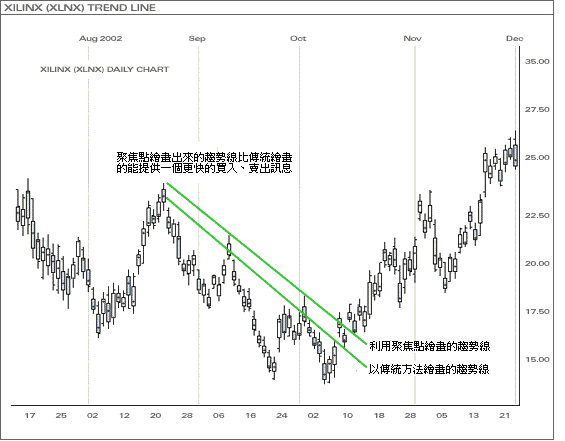
By using Modal Points to draw the resistance trend line, an earlier entry into the market is possible. On occasions, the break of resistance (or support) is usually accompanied by a gap up (or down). By using an earlier entry (or exit) point, one may be able to bypass the gap. |